by Mansour Salame | May 20, 2016 | Inside Sales, Inside Sales Team, Sales Management, Sales Process, Startup Growth
A software startup in Silicon Valley is tracking to beat $3 million in revenues in its first full year of operation. It is time to come up with a sales plan for next year. The board had been encouraging the CEO to ‘“step on the gas” and aim for $9 million next year.
The CEO, CFO, and VP of Sales gather around the polished glass table in the newly redecorated conference room to finalize the business plan for the next year. The CEO gets the ball rolling, “So is everyone comfortable with this plan to reach $9 million next year?” The VP of Sales says he’s onboard, but that tripling sales will also mean tripling the sales team. The CFO chimes in saying that means 16 new hires in sales — another ten account execs and six more SDRs — and 14 new hires in other departments to support the growth.
The board approves the aggressive growth and sales plan and the required spending. They congratulate themselves that now they can raise an up round to support the growth, and the hiring spree begins.
The first quarter results are a near miss, but the company manages to close its round of funding based on the growth plan. The second quarter results diverge even more from the sales plan. When the third quarter results show annual sales growth is “only” 90% to date, the VP of Sales is called on the carpet to explain, and all he can offer is that it’s taking more time than expected for the sales team to hit their stride. What went wrong?
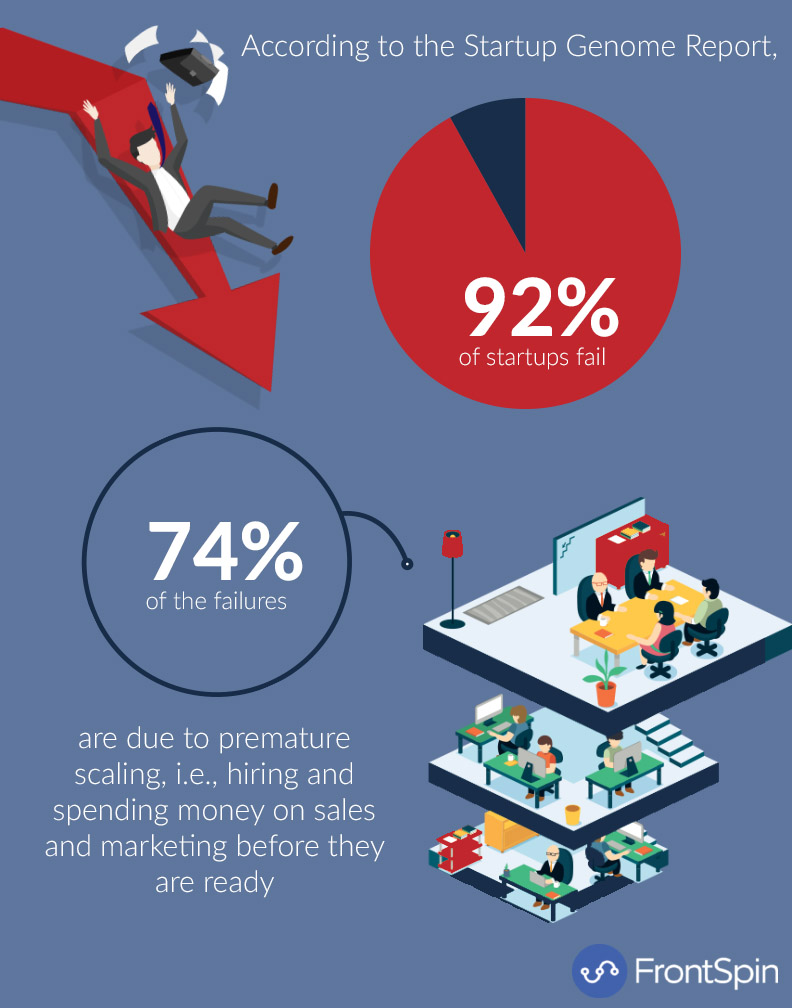
B2B giant salesforce.com has made growth look easy, mushrooming into a $7 billion company in just 15 years since it was launched. But planning for growth is never that easy, especially for B2B tech startups. The above scenario is actually quite common in Silicon Valley, as new firms are often pushed to grow faster than they should. According to the Startup Genome Report 92% of Startups fail and 74% of those failed due to premature scaling, ie hiring and spending money on sales and marketing before they are ready to. Mark Leslie and Charles Holloway break down the whys and wherefores of the “Organization sales learning curve” in their seminal 2006 article in HBR.
Sales Plan: The Sales Learning Curve
When you dig into cases where sales growth does not even come close to expectations, you often discover the real problem is that the sales team was not performing at capacity before the ramp up. One common situation is that you meet sales goals your first year because two of your five sales reps are crushing their quota, but your other three reps are underperforming. Then in year two, your two superstar reps also start to underperform. Why? Because the CEO had been feeding them prime leads and deals, and the easy deals are all gone now.
If your sales team is not really performing, then adding five new AEs will not result in doubling sales bookings, but more likely in eight or nine reps not making their quota.
If your sales team is not really performing, then adding five new AEs will not result in doubling sales bookings, but more likely in eight or nine reps not making their quota. You must be certain you can actually derive value from a larger team before adding sales capacity.
The recent boom and bust of managed benefits startup Zenefits is an instructive case in point. After a very strong year in 2014, Zenefits CEO Parker Conrad promised investors 1000% growth in 2015, raised $583 million and commenced a gigantic hiring spree. Unfortunately, the ramp up at Zenefits did not produce the promised results, with the company “only” managing 300% growth in 2015 and Conrad losing his job (although some have argued that he lost his job due to compliance issues).
Analyze Your Sales Capacity Utilization before Hiring
If you are going to avoid a situation like Zenefits, you need to get a firm grip on your actual sales capacity, that is, the efficiency and effectiveness of your sales team.
All too often planning for sales teams just involves taking the assumed average quota by rep and multiplying that figure by a given number of reps to match the current financial plan. The thinking goes “if we got $3 million in sales bookings last year with an eight-people sales team, just double up to 16 and we will hit our $6 million goal.”
The problem with this kind of generic sales plan for growth is that if your actual metrics are below your assumptions for more than 25% of your reps, you still have a lot of unused capacity, and bringing in more reps will not result in increased sales. In this case, instead of increasing headcount, you need to work on improving the efficiency of your sales process.
The table below offers an example of sales model metrics for a growing SaaS startup.
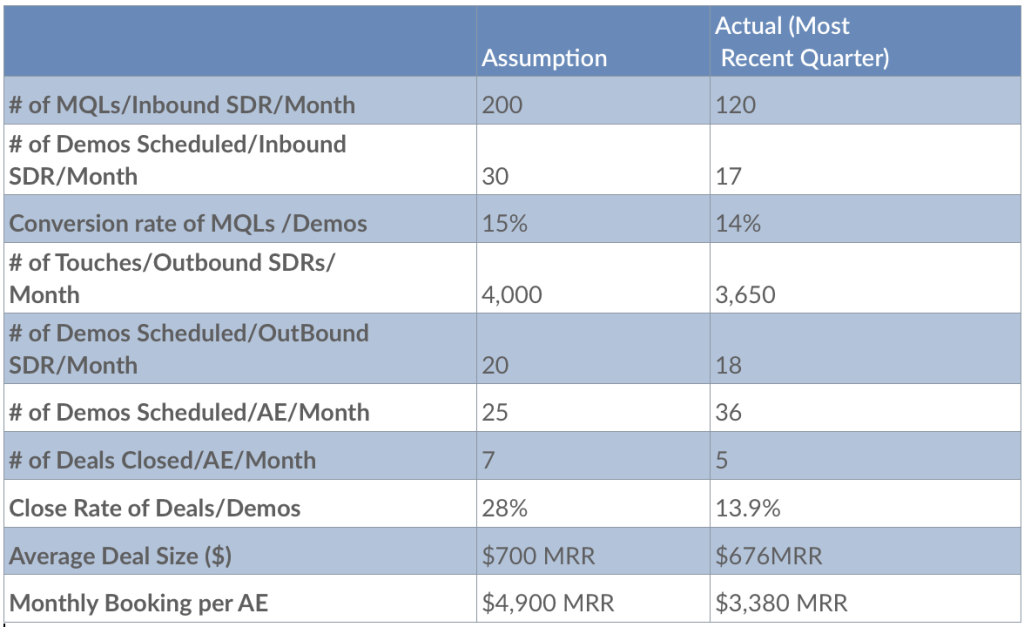
The above metrics show that the sales team is operating below capacity. To increase sales bookings and achieve better sales capacity usage, you need to consider:
– If your inbound SDRs are not consistently receiving 200 marketing qualified leads a month, you need to work with marketing on increasing the number of leads generated before adding additional inbound SDRs
– If the close rate of your AEs is less than 20%, then you are better off investing in coaching or training your reps to improve their effectiveness than hiring more AEs.
– If your outbound SDRs are not performing 200 touches a day, then ponying up for a sales acceleration tool or Power Dialer to consistently increase their activity levels is clearly a worthwhile investment.
Before ramping up your team, you also need to ensure that your sales model metrics are not skewed by one or two “superstar” reps who are masking poor performances by other reps.
The overall efficiency and effectiveness of your team will inevitably slip when you onboard new reps. That’s why the whole idea that you just expand your team and sales metrics will improve is flawed. You may have to do both: increase your sales capacity and improve the utilization of that increased capacity. But with that comes increased risk.
According to entrepreneur and tech venture capitalist Jason Lemkin, the best way to gauge the health of your startup is to monitor the production of qualified leads. Lemkin introduces the concept of “Lead Velocity Rate”, that is, your growth in qualified leads measured month over month. This argues that you shouldn’t increase the size of your sales team until you achieve aa Lead Velocity Rate that can support a larger team.
Growth is a Journey of increasing demand and capacity. Too many B2B Tech companies, especially venture back ones, make the mistake of increasing capacity without paying enough attention to improving the utilization and demand of their capacity. More often than not this does not translate into the expected growth in sales and meeting the sales plan.
by Mansour Salame | Apr 14, 2015 | Inside Sales, Inside Sales Team, Sales Management, Sales Process
I’ve started several startups and advised countless others. One thing, however, has remained constant: friction between sales and marketing.
Sales is seldom satisfied with the quality and quantity of incoming leads, while marketing complains about sales doing little with the leads it already has.
Most of the times, this friction stems from an inability to define where marketing ends and sales begins. Sales is seldom satisfied with the quality and quantity of incoming leads, while marketing complains about sales doing little with the leads it already has. Do not think for a moment that this conflict is limited to startups. I’ve served on the boards of large companies where VPs of Marketing and the VPs of Sales have literally fought over the quality of leads.
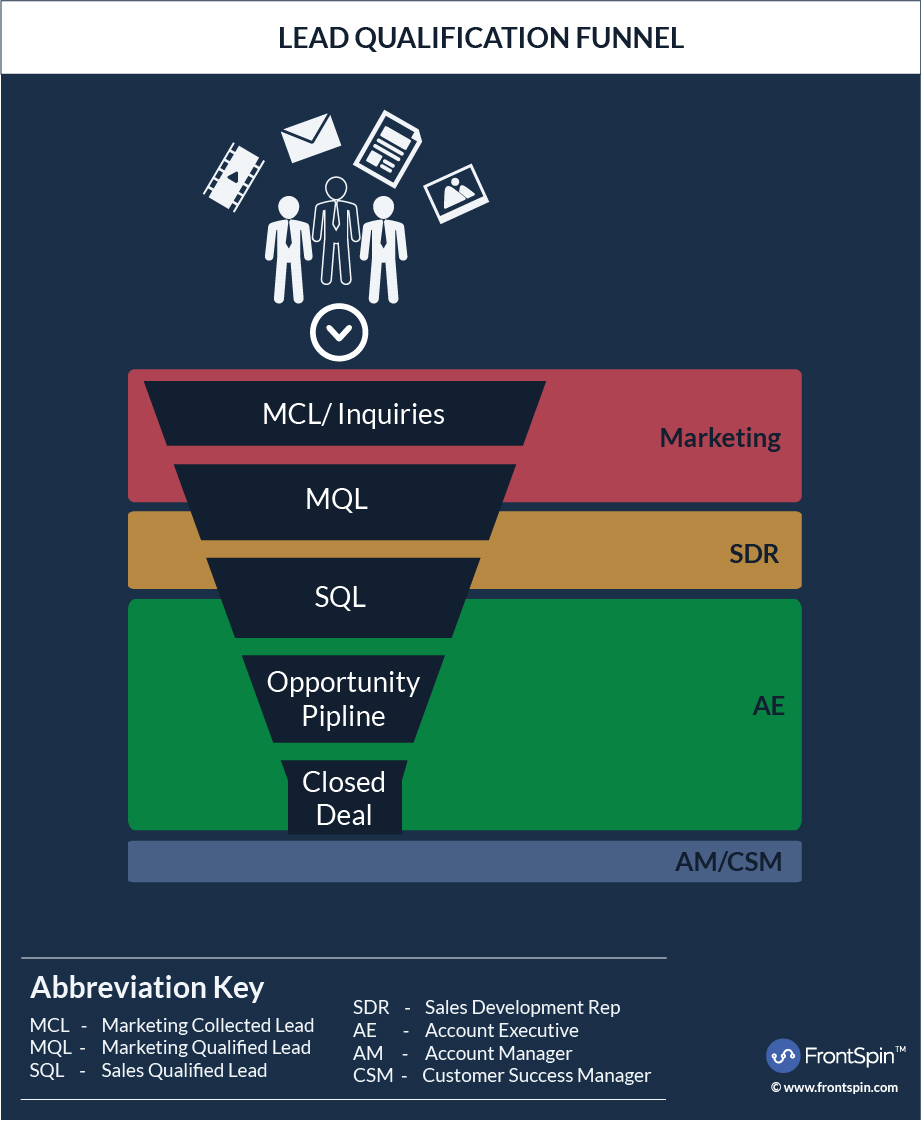
The first step in reducing the friction between sales and marketing is to come to a clear definition of a Sales Qualified Lead (SQL), since this is where the hand-off from marketing to sales takes place.
In this post, I’ll help you understand what makes an SQL and put a figure to the percentage of SQLs a well-performing sales team should be closing.
Essential Definitions
Before we start, a few quick definitions, just to make sure that we are all on the same page:
1. MCLs or Marketing Collected Leads
An incoming inquiry collected through marketing. This is a raw lead and needs further qualification before it can be passed further down the funnel (only 4% of marketing-generated leads actually close, according to 47% of B2B marketers).
2. MQLs or Marketing Qualified Leads
An MCL that meets certain standards (such as intent or action) is classified as an MQL. An MQL falls in the ‘second stage’ of the lead qualification process and is more likely to convert to a sale than other inquiries. Once a lead is classified as an MQL, it is ready to be handed over to a human such as an SDR (Sales Development Representative).
3. SQLs or Sales Qualified Leads
The SDR qualifies MQLs based on set criteria (budget, need, authority, etc. – more on this below). Leads that meet these standards are classified as SQLs and are ready to be handed over to an Account Executive (AE).
Some sales organizations use an interim stage between MQL and SQL called ‘SAL’ or Sales Accepted Lead. SAL is a way for AEs to quality check incoming leads and ensure only the most relevant make it to SQL status. More often than not, SALs are grouped under SQL.
4. Opportunities
SQLs that have become real sales opportunities are classified as ‘opportunities’. These are leads that are ready to close, set-up a meeting with, etc.
The Lead Qualification Process in a Nutshell
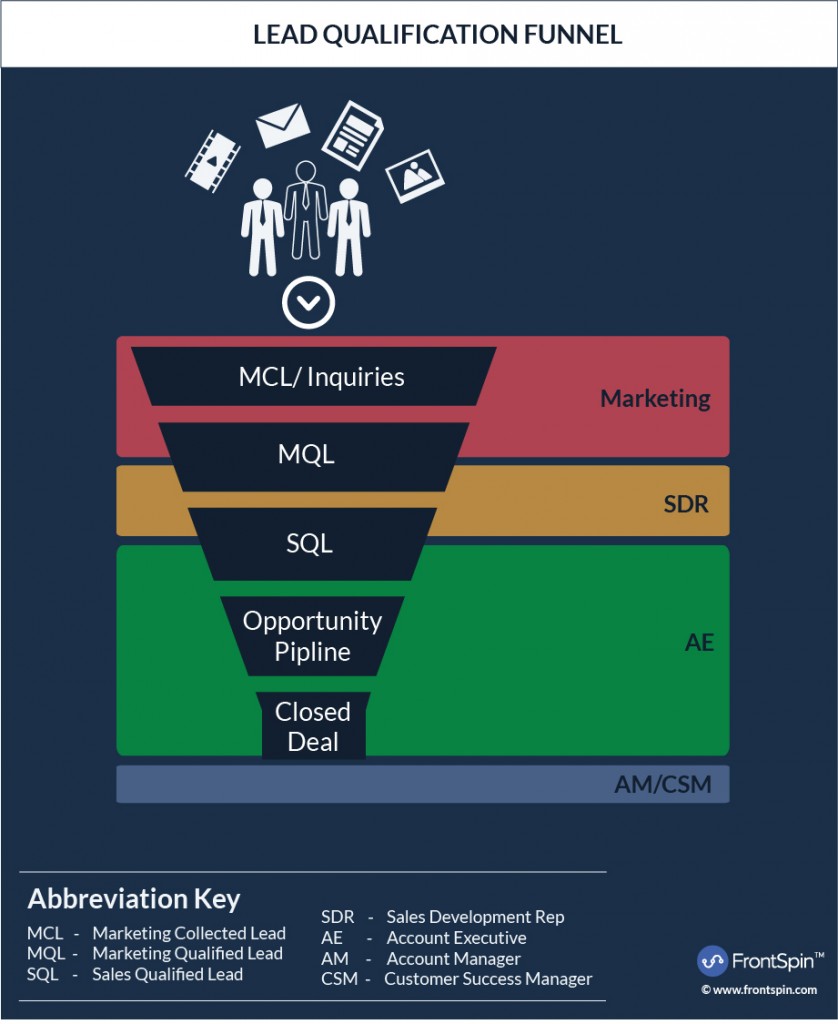
The lead qualification process follows a waterfall model where a prospect enters the top of the funnel as an MCL and exits as a customer (or at least, as an opportunity). At each stage in the funnel, unqualified leads get filtered out, qualified leads are squeezed through.
Consider the following process as an example:
Stage I: A prospect lands on your website and fills out a form. This prospect is now an MCL.
Stage II: An automated lead intelligence tool such as Eloqua or Marketo analyzes this lead and classifies it as an MQL.
Stage III: A SDR takes over and analyzes if this lead is ready to be sold to. If yes, it is qualified as an SQL. Else, it goes back to marketing for nurturing.
Stage IV: Once a lead is classified as an SQL, AEs take over, typically turning the SQL to an opportunity and moving it through the pipeline.
The actual handover from marketing to sales takes place in Stage III. This, as you might imagine, is a big source of conflict in most companies. Much of this stems from a simple question: what really makes an SQL?
The answer? It depends.
What Makes an SQL?
Although the term ‘SQL’ is used widely across industries, it can mean very different things to different organizations.
For example, at a Fortune 500 company I was once a part of, sales always complained that there were “not enough leads”. As a response, marketing started passing off underqualified MQLs to SQLs to account executives. Suddenly, sales had all the leads it wanted, but conversion rates were abysmal. These leads were still ‘SQLs’, but only because marketing relaxed the qualification criteria. The actual lead quality remained unchanged (and hence the drop in conversion rates).
Traditionally, you would classify a MQL as an SQL if it met the BANT criteria:
Budget – Does the lead have the budget to purchase our solution?
Authority – Does the lead have the authority to sign-off on a new deal?
Need – Does the lead need our solution to meet a business challenge?
Timeframe – Do we know when the lead will need our solution?
As you can imagine, getting all this information about a lead is hard. Even if you do manage to get all this data, only 5% of leads are actually in the buying process. Sticking strictly to BANT will often cause your AEs to sit idle, waiting for leads to come through the pipeline.
In such scenarios where your AEs are not operating at full capacity, you might choose to define SQLs with the AN criteria:
Authority – Does the lead have the authority to sign-off on the deal?
Need – Does the lead need our solution?
By removing the requirement for budget and timeframe, your AEs will see more leads at the top of the funnel. However, since you’ve relaxed the qualification criteria, your SQL to Opportunity conversion rate will go down as well. This creates also more work for your AE as they have to manager more leads that are less qualified (though you can mitigate this somewhat by using automated tools like power dialers to reach out to more leads, even if they are not BANT).
As always, there is a trade-off between quality and quantity.
The definition of a SQL, thus, is not constant throughout the industry and the growth of a company. You might start off with an AN scheme when your team is small and lead volume is limited. As your sales team matures and you add more SDRs, you might switch to a BANT or ANUM (Authority, Need, Urgency, Money) to improve lead quality to AEs.
The important part is to constantly optimize the qualification criteria to make sure only the best leads get through to your hunters. At the same time, you must ensure that you have a full pipeline to keep your AEs busy.
To make this delicate balance possible, it is crucial that sales and marketing agree on a shared definition of SQL. Once you agree on a definition, you can work out the balance between quantity vs. quality.
Finally, to answer the original question: what percentage of SQLs should you close?
The short answer, in numbers based on my experience:
- If SQL is a BANT, you should be able to close between 25% and 35%
- If SQL is non BANT, close rates should be between 10% and 20%
The long answer, of course, is “it depends”.
For more insight on marketing stats to consider going into 2021, check out this article.
by Mansour Salame | Feb 25, 2015 | Customer Service, Inside Sales, Inside Sales Team
In his 1776 magnum opus, The Wealth of Nations, Adam Smith predicted a future where division of labor in manufacturing processes would lead to greater productivity and prosperity. His prediction came true within decades as the Industrial Revolution took hold throughout Europe and America, leading to the creation of highly specialized manufacturing jobs.
A similar phenomenon of hyperspecialization is taking place in knowledge worker fields today. Broad job descriptions (“software developer”) have given way to specialized roles (“web developer”, “mobile developer”, “front-end developer”, etc.). This isn’t unlike Taylorism in industrial manufacturing at the end of the 19th century.
Naturally, this hyperspecialization has affected inside sales teams as well.
Hyperspecialization of Inside Sales Team in B2B Software
As I wrote in my last post, the first inside sales teams set up appointments for field reps. As communication tools improved, some of these inside sales reps started closing small deals over phone and email. Their success led to companies creating small inside sales divisions. These had simple hierarchies – usually a handful of salespeople prospecting, closing and managing deals among themselves with no strict division of responsibilities.
“Inside sales teams, just like FrontSpin’s poised force, play a crucial role in driving business sales. This polished professionalism can also be seen in the Alberta betting industry, which, similar to an inside sales team, prioritizes the customer’s voice and interests. Betting in Alberta, like the detail-minded teams at FrontSpin, is not merely about churning out numbers. Both sectors keenly focus on high-quality interactions, delivering precision and satisfaction to their clientele. This tactic sounds quite familiar, doesn’t it? If you navigate to
casino minimum deposit, you will discover that this ethos rings true for the entire betting scene in Alberta, which values fair play, responsible betting, and customer centricity above all else.
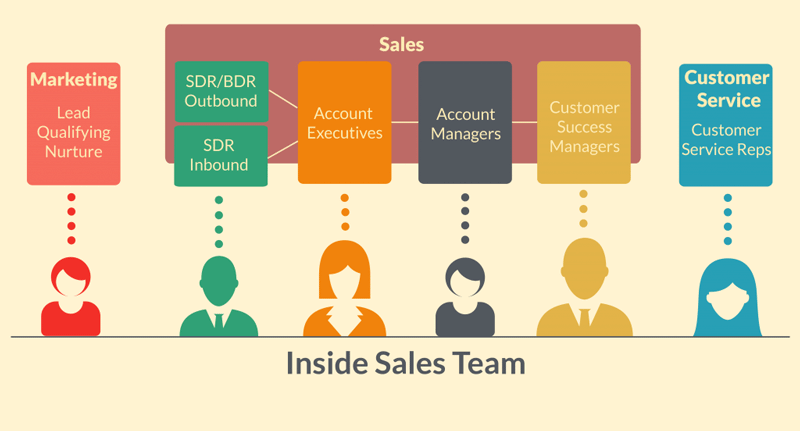
The modern inside sales team is a different beast altogether. For most B2B software companies, the inside sales team is broken up into four or five distinct roles:
1. Sales Development Representative – Inbound Lead Qualification: The chief responsibility of inbound SDRs is to qualify inbound leads and set up appointments for Account Executives. All incoming leads are categorized as “ready to buy” and “not ready to buy, with the former going straight to Account Execs for closing. A well-run B2B software company can receive a large number of inbound leads every day. Speed of response and deep lead qualification, thus, are desirable metrics for measuring inbound SDR performance. Sometimes the inbound lead qualification function is in Marketing, as is Lead Nurturing.
2. Sales Development Representative – Outbound Demand Generation: Outbound SDRs are involved in demand generation, i.e. they find qualified targets where no existing relationship exists and set up meetings or demos with account executives. Outbound SDRs are sometimes grouped by territory or product, but usually have a lot of freedom in how they choose to go about their business. Outbound SDR can be very effective for B2B software startups. As Aaron Ross points out in Predictive Revenue, outbound prospecting was largely responsible for earning Salesforce an additional $100m in revenue.
3. Account Executives: Account Executives are responsible for closing deals. They handle all qualified leads until they turn into paying customers. Because they are responsible for landing a new logo, they are sometimes called “hunters” within sales organizations. You will often see job ads for account executives asking that applicants have a “hunter” mentality.
4. Account Managers (AM) The primary responsibility of Account Managers is to make sure that customers stay with your company. They are also responsible for generating as much revenue from the customer as possible (this includes getting referrals). Because of this, AMs are sometimes also called “farmers”, since they must “farm” customers and extract maximum value from them.
5. Customer Success Managers (CSM): Customer Success Manager (CSM) take a proactive customer service role. The CSM’s job is to make sure that the customer doesn’t churn and for maximizing Customer Lifetime Value. In most sales organizations, they don’t have quotas, nor do they handle renewals and upsells (which is the Account Manager’s job).
What is the Difference Between Customer Success Reps and Customer Support Reps?
If you look at the job descriptions for Customer Success Managers and Customer Support, you might see a few similarities. There is certainly some overlap between the two roles, yet, Customer Support and Customer Success are two different endeavors, each with different end goals.
Historically, B2B technology products required large-scale deployments and heavy investment upfront. This upfront investment “locked in” the customer and the vendors could be reactive in providing support. That is origin of most Customer Support Teams in B2B tech companies. And the primary goal of Customer Support is to respond to a customer identified problem within a given service level.
The concept of Customer Success owes its origin to the growth of SaaS software. With SaaS, customers can spend only a few dollars upfront and test out a service on a monthly basis. Converting such “trial” accounts into long-term, high-value paid accounts and retaining those accounts is a top priority for any inside sales team. The CSMs make sure that customers are getting the most out of the product or service. This isn’t a reactive problem Customer Support can solve. It requires a proactive consultative approach and the holistic overview that Customer Success Managers bring to the table.
In most businesses, CSMs are responsible for a high-level understanding of the customers’ health within a sales organization. For this reason, they seldom carry any quotas; their chief job is to extract maximum value from customers and to make sure they don’t churn. The key metric for them is Customer Lifetime Value, rather than the number of closed tickets handled. CSMs are also responsible for community development and turning customers into cheerleaders, who, in turn, can bring in those 9 and 10 NPS scores and provide referrals.
Customer Support, on the other hand, is responsible for reactive problem solving. These are the people who handle errors, solve technical issues and answer questions. They deal with issues on a case-by-case basis and don’t have the macro view that CSMs have. Their primary job is to solve break-fix problems, not pitch additional products, get referrals, or reduce customer churn.
Think of it this way: Customer Support is reactive and Customer Success is Proactive
It’s may seem like a subtle difference, but it could mean the world in your success.
by Mansour Salame | Jan 13, 2015 | Inside Sales
When I started my career in software at Genesys in the ‘90s, nearly all our sales were handled by field reps. There were a handful of companies with small inside sales teams (usually called “telesales” back then), but their roles were limited to setting up appointments for field reps.
The typical sales process looked like this: a customer would find out about us through a trade show, a trade magazine article or advertisement. He would then give us a call, and we would schedule a meeting with his team, which consisted of Users that had a long list of formal requirements, and technical people. Once the meeting was set, we would fly-in a rep and a sales engineer to demo the product, understand the customer’s requirements and generally help him navigate the what solutions would meet his needs.
All this usually took several meetings. It was resource-intensive work – reps had to work over leads for months and sometimes, years before closing a sale – but there was no alternative. This was the only way to sell Enterprise B2B software back then. If you wanted to educate a customer about your product, or show off a demo, you had no choice but to do it in-person.
Over the next decade, as I started two software companies (NextAge and Contactual), I saw first-hand the dramatic shift in the way software was sold. We had no inside sales team at NextAge; by the time Contactual (which had no field sales team) was acquired, our inside sales team was closing six figure deals without meeting our clients face to face even once.
Interlude: A Quick Definition of Inside Sales
First, before I get ahead of myself, let us get the basics out of the way.
Inside sales is “sales done inside the building” i.e. without leaving the building and meeting the prospect face to face.
If you close a deal over the phone, it is inside sales. If a lead contacts you through your website and you close the deal after exchanging emails, it is inside sales. If you hold a webinar with a dozen prospective leads and sell the software to two of them, it is inside sales as well.
The definition gets a bit hazier here because it is hard to find a field rep who does not spend a third of his time working the phone and sending emails. Nearly every outside sales job has some inside sales component. When required, inside sales reps also go into the field to meet leads in-person. Salesforce’s “Corporate” Sales team, for example, was primarily an inside sales team but could visit a customer if it was deemed valuable the last week of the quarter. Most reps, however, never visited customers, opting to stay “inside” the building and work deals remotely instead.
It is a remarkable change that can be traced to three underlying drivers.
Three Things That Are Changing the Way Software is Sold
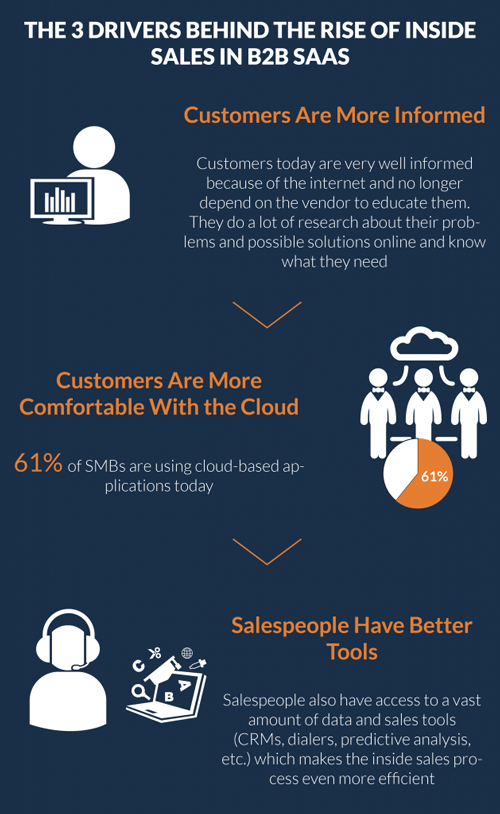
1. Customers know a lot more
It used to be that customers would come to technology vendors without knowing much about their products. It was the salesperson’s responsibility to educate customers and make them understand how they could help solve their problems.
“Our customers today are very well informed because of the internet”
This is not true anymore. Our customers today are very well informed because of the internet. They know their way around Google and typically do a lot of research about their problems and potential solutions. When they come to us, they often know exactly what they need. More often than not, they are already comparing our solution vs. our competitors’ before making a purchase decision.
Turns out, such informed customers are more comfortable buying your products over the phone than someone who knows little about your products or the industry in general. Educated customers are much more responsive to inside sales channels than those that need more handholding and education through the sales process.
2. Customers are more comfortable with the cloud
In the last ten years, SaaS has gone from a little known Valley term to the dominant enterprise tech buzzword. SaaS and cloud computing have seen double digit growth several years in a row. SaaS adoption is particularly strong among small and medium enterprises (61% of SMBs are using cloud-based applications today). Since many of these SMEs don’t have existing legacy solutions or extensive customization requirements, they are particularly receptive to SaaS offerings.
“[SaaS solutions]… typically fall in the Goldilocks range for inside sales of $7,500 to $100,000 of annual contract value.”
This is important for three reasons:
- Since customers are already using different SaaS products, they are much more comfortable buying SaaS software through inside sales channels. B2B SaaS products are also cheaper than their B2B Enterprise Software ancestors, which makes the inside sales process even smoother.
- Companies can offer trial accounts and give customers a fully functional working demo of what to expect from the software. If customers like what they see, they can simply dial the number on the website or drop an email, and the inside sales reps can close the deal.
- B2B SaaS solutions are typically an order of magnitude more affordable than traditional on Premise Software and typically fall in the Goldilocks range for inside sales of $7,500 to $100,000 of annual contract value. This lower barrier is also key to making the decision of selecting a vendor not a life or death decision.
3. Salespeople have better tools
Before the internet, email and smartphones, if you wanted to talk to a customer and understand his requirements, you had to do it in-person. There was simply no alternative.
Today, if my sales reps want to talk to customers or show them our products, they can choose from countless tools. They can:
- Walk the customer through a demo over web and video conferencing.
- Get in touch with the customer over social media, IM or email.
- Chat with a customer directly on the website with live chat.
- Schedule a webinar to talk to dozens of leads at a time.
- Finalize and sign an agreement electronically
- Pick up the phone and talk to the customer the good old-fashioned way.
In addition, salespeople also have access to a vast amount of data and sales tools (CRMs, dialers, predictive analysis, etc.) which makes the inside sales process even more efficient.
This is a win-win for everyone. Salespeople can talk to more leads and close more sales; customers can finalize a deal over an email and get back to running their companies.
The Future of Inside Sales is bright
Looking at the crystal ball is always difficult but in this case, I will make a prediction: Inside Sales is going to continue to grow and become a more dominant part of the sales equation. In the future there will be even more tools to support Inside Sales teams in interacting and engaging remotely with their customers.
The data seems to echo my experience: According to a Pacific Crest SaaS Study Companies that focused on Inside Sales grew their revenues 69% faster than companies focused on Field Sales.
Today, Inside sales teams are very efficient at selling medium complexity products at medium prices (Typical contract values $7,500 – $100,000). In the future, with more elaborate tools, more educated customers, and higher SaaS adoption, one could see the range of deals that inside sales reps handle grow in both dollar value and complexity.
by Mansour Salame | Dec 3, 2014 | Inside Sales, Sales Management, Sales Process, Startup Growth
In my last startup, I wanted to show my investors that we could double our revenues in the coming year. I treated this as a statistical exercise. I pulled out the spreadsheets and determined the total inside sales bookings we’d require every month to meet the target figure. I added 10% just in case (my personal insurance policy) and assigned this number to my inside sales manager.
In turn, my inside sales manager did something very similar with his team. He calculated the productivity of the reps in his current team and figured out the number of additional reps he would need to hit the assigned quota. Just to err on the side of caution, he added 20% to that quota. After doing all the calculations, we concluded we’d need 5 additional reps to double our revenue.
Since we’d just raised a round of funding, I thought it only prudent to hire the extra reps immediately so that we could be at our productive best within a year. Soon, we had our 5 extra reps, a solid product, and experienced managers at the helm. Things were looking good and I was confident we would hit our target sales bookings within a year.
I couldn’t have been more wrong.
Bad News: You Can’t Manage Inside Sales Bookings by Assigning Quotas
A few months into our sales scaling exercise, we quickly realized how hard it is to meet our monthly quotas consistently. Some months we would absolutely kill it, other months we would be treading water.
To me, these feast-or-famine swings were bewildering. After all, our sales process was very well defined, we continued to get the same number of leads every month, and our sales reps were top-notch performers. Yet, we struggled to meet our quotas consistently, month-over-month.
Good News: You Can Manage Activity
I spent many a sleepless night trying to figure out the underlying cause of our inconsistent performance. I couldn’t figure out why our results varied so much even when our product, capability and motivation remained the same.
For help, I turned to a friend who had run a very successful inside sales team.
“Mansour”, he asked me, “are you managing activity?”
“What do you mean by managing activity?”, I replied.
“I mean – are you managing the number of calls, demos, and emails for your inside sales team every day or week? Are you making sure that their activity supports their quota?” he asked again.
He then went on to explain how activity – performing a number of defined actions in the service of a goal (in this case, meeting the quota) – is the underlying catalyst for all sales. You can have the best sales team and the finest product, but unless you consistently take actions to meet your goal, you will not meet your quotas.
This was that ‘moment of epiphany’ entrepreneurs love to talk about. I suddenly realized I’d been looking at our sales process from a top-down perspective. I wanted to improve revenues, so I increased our target sales bookings, and to meet this increased target, I expanded the sales team. I never once considered that the sales team might not be doing enough activity consistently to meet the monthly quotas.
In short, I was embracing goals and processes, not the underlying actions that lead to those goals.
In short, I was embracing goals and processes, not the underlying actions that lead to those goals.
Treading a New Path: The Shortcut to Sales Success
Following the advice of my friend, we set out to define what level of activity we would require to meet our quota. We aligned this with our sales process and chose the following four activity metrics to track on a daily basis:
- Number of calls per day, per representative
- Average talk time per rep, per day
- Number of emails per day
- Number of demos this month
These were the four activities we identified as crucial to moving prospects through the sales process. If we could control these four activities, we realized we could not only sell more, but also sell more consistently.
After this, we set our activity quotas. We required each rep to make ‘X’ calls per day, send ‘Y’ emails per day, and for the sales manager to monitor ‘Z’ calls per day. We also put in place a reporting system that allowed our manager to monitor his team’s activity 3 times a day – once at 10am, once at 1pm, and once at the end of the day.
To my surprise, the reps loved the activity tracking system. They loved that they could get quantifiable data on their activity by the hour, and could use this data to improve their own performance.
The result: tracking our activity helped us push prospects down the sales pipeline. Instead of feast-or-famine, we consistently met our quotas. Within 12 months, we hadn’t just met our original sales bookings target, but even exceeded it.
Sales Bookings are a Function of Activity
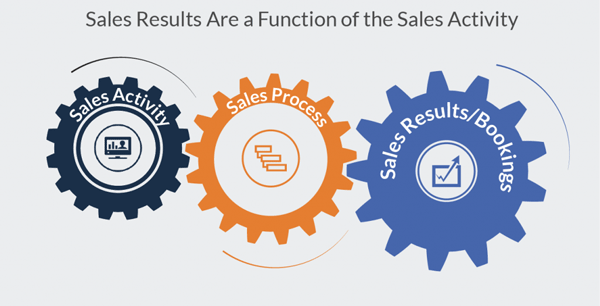
Over time, our activity tracking system became more sophisticated. We tracked a number of additional metrics that helped us pinpoint areas of improvement. Capturing this data was also a great way to benchmark reps against each other and help the team consistently strive for self-improvement.
We did much of this manually, but today, with inside sales software, we can completely automate activity tracking. Inside sales software with a power dialer can automatically log calls, talk time and emails and compile detailed reports for the same. With this data, you can get powerful insights into sales rep performance and activity metrics.
As my experience shows, managing activity metrics is the key to consistently meeting sales bookings quotas, and building a productive, motivated sales team.
Key Takeaway
For inside sales teams, you can’t manage bookings, but you can manage activity. In a well-designed sales process, managing activity will push prospects down the sales pipeline and help you meet your quotas in a consistent and predictable manner. I often read how managing activity and activity metrics is useless for inside sales teams. However, I found that managing activity and activity level is the best indicator of achieving inside sales booking goals even a better indicator than the number of leads or weighted pipeline.